Tuesday, April 4, 2023

We have changed our name to: Institute for the Study of Ancient Cultures, West Asia & North Africa (ISAC)

We have changed our name to: Institute for the Study of Ancient Cultures, West Asia & North Africa (ISAC)


Our previous name, The Oriental Institute has led to confusion, often contributing to the perception that our work was focused on East Asia, rather than West Asia and North Africa. To address this issue, in 2021, we organized a Name Change Committee that worked collaboratively with University of Chicago faculty, staff, students, stakeholders, and supporters, as well as colleagues at peer institutions around the world. The committee collected data representing a broad range of perspectives, which informed their decision to recommend a new name that more clearly honors the cultures, regions, and time periods that we study.

To learn more about ISAC’s decision to change our name, click here to read an article by our Interim Director, Theo van den Hout.

To learn more about the changing history of the word “oriental”, click here to read an article written by Tasha Vorderstrasse, ISAC Manager of Adult Education.

Along with our new name, we also embrace a new logo. In October 2022, we invited ISAC and University faculty, staff, students, Advisory Council Members, volunteers, and docents to contribute their ideas for motifs, objects, and design elements that could serve as inspiration for our new icon. The submissions received overwhelmingly favored floral motifs found throughout the ISAC building, both in our architectural design elements and in our collections.


Wednesday, December 23, 2020

Oriental Institute Annual Reports

Oriental Institute Annual Reports


Oriental Institute Annual Report
The print versions of the Oriental Institute Annual Report are available for members as one of the privileges of membership. They are not for sale to the general public. They contain yearly summaries of the activities of the Institute’s faculty, staff, and research projects, as well as descriptions of special events and other Institute functions.

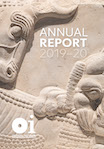
Oriental Institute 2019–2020 Annual Report


DOWNLOAD THE ENTIRE 2019–2020 ANNUAL REPORT IN A SINGLE PDF


INTRODUCTION

RESEARCH

INDIVIDUAL RESEARCH

RESEARCH SUPPORT

MUSEUM

COMMUNICATIONS

PUBLIC EDUCATION

VOLUNTEER PROGRAM

DEVELOPMENT

FACULTY, RESEARCH ASSOCIATES, AND STAFF

INFORMATION


For an up to date list of all Oriental Institute publications available online see:

Thursday, February 20, 2020

‘Trying desperately to make myself an Egyptologist’: James Breasted’s early scientific network

‘Trying desperately to make myself an Egyptologist’: James Breasted’s early scientific network
Pages: 174–187 (14 total)
Download PDF 
 

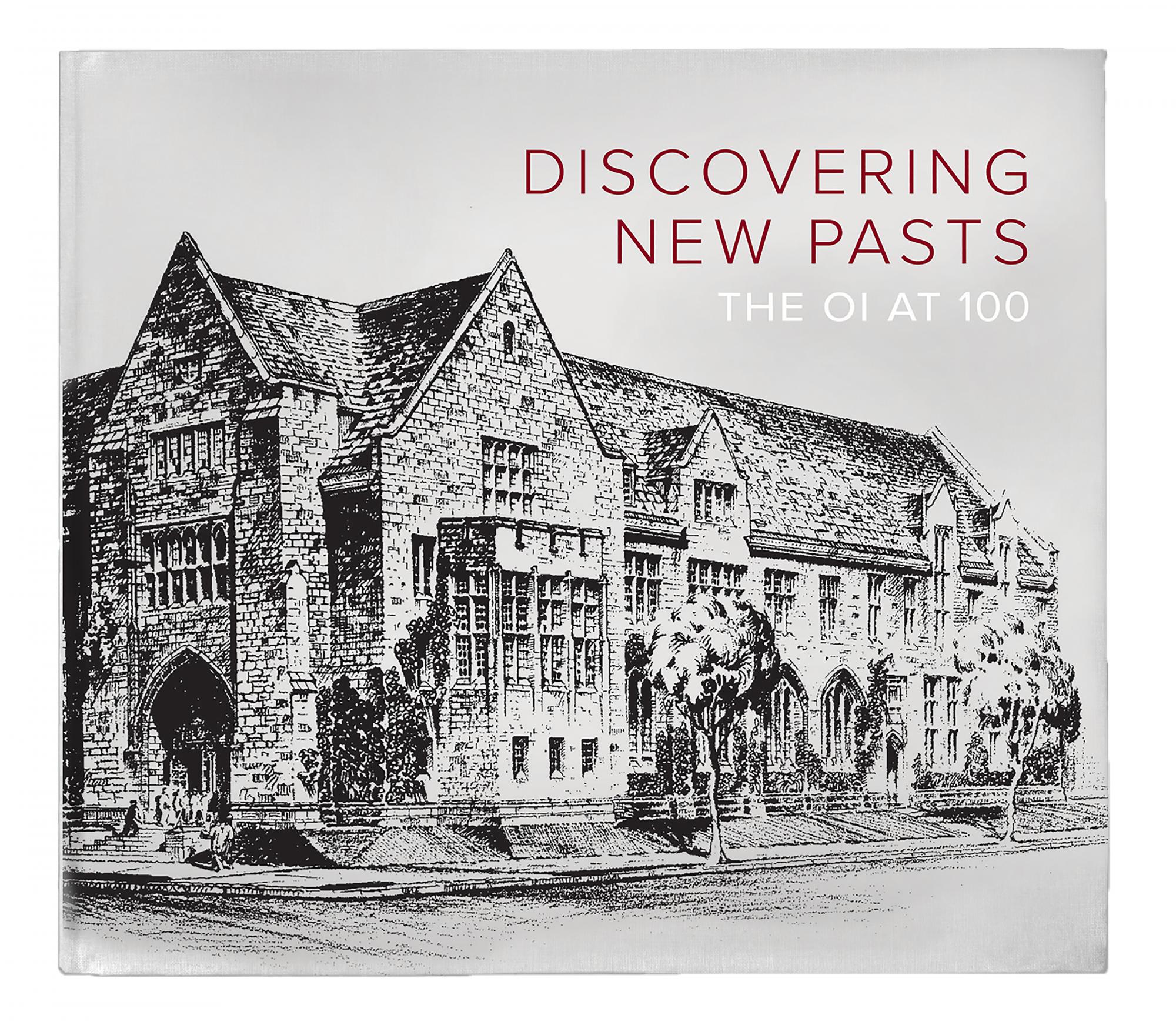
Discovering New Pasts: The OI at 100

Discovering New Pasts: The OI at 100
Theo van den Hout, ed.
https://oi.uchicago.edu/sites/oi.uchicago.edu/files/uploads/shared/docs/Publications/Misc/MISC-Discovering%20New%20Pasts.jpg
Purchase Download Terms of Use
In celebration of the OI’s centennial year, over sixty different authors and contributors have come together to provide a personalized history of the OI’s work past and present. In these pages we invite you to join us on an adventure. Explore the legacy of James Henry Breasted and the institute he founded. Discover the inner workings of the OI and its museum. Travel across multiple continents to learn about groundbreaking research. Enjoy a unique collection of nearly six hundred images, all in one publication for the first time. Learn the story of the institute’s development—from being one man’s dream to becoming one of the world’s preeminent authorities on over ten thousand years of human civilization.

Table of Contents

Foreword. John Rowe
Introduction. Christopher Woods
Note from the Editor. Theo van den Hout
Authors & Contributors
Map of the Ancient World
Timeline of the Ancient Middle East
BEGINNINGS
01. Seeking Permanence
Seeking Permanence: James Henry Breasted and His Oriental Institute. Jeffrey Abt
02. Architecture of the OI
Architecture of the OI. Susan J. van der Meulen
THE INSTITUTE
03. Museum
Introduction. Jean M. Evans
A History of the OI Museum. Emily Teeter
The Tablet Collection. Susanne Paulus
Keeping the Past Present: A Short History of the OI Museum Archives. Anne Flannery
Conservation: One Hundred Years of Change. Laura D’Alessandro
Registration. Raymond Tindel & Helen McDonald
04. Education
OI Volunteer Program. Terry Friedman, Sue Geshwender & Janet Helman
Youth and Family Programs. Calgary Haines-Trautman
05. Research Archives
A Kind of Paradise: The Research Archives of the OI. Foy Scalf
CAMEL. Anthony Lauricella
06. Publications
Makin’ Books: OI Publications. Charissa Johnson
AREAS OF RESEARCH
07. Egypt
Egypt: Where the OI Began. Brian P. Muhs
The Epigraphic Survey, 1924–2019. W. Raymond Johnson & J. Brett McClain
Chicago House: Technological Innovations in Epigraphic Recording. W. Raymond Johnson & J. Brett McClain
The Chicago Demotic Dictionary. Janet H. Johnson & Brian P. Muhs
The Coffin Texts Project. Robert K. Ritner
The “Ancient Egyptian Paintings” Project. Robert K. Ritner
the Mummy Label Database (MLD). François Gaudard, Raquel Martín Hernández & Sofía Torallas Tovar
Tell Edfu. Nadine Moeller & Gregory Marouard
08. Mesopotamia
Mesopotamian Archaeology at the OI. McGuire Gibson, Karen Wilson & Jean M. Evans
Assyriology and the Assyrian Dictionary. Martha T. Roth
09. Iran
The Past and Present of the OI’s Work in Iran. Abbas Alizadeh & Matthew W. Stolper
10. Afghanistan
OI Cultural Heritage Preservation Projects in Afghanistan. Gil Stein
11. Anatolia
Hittite and Anatolian Studies at the OI. Richard Beal
12. Levant
Northwest Semitics in the OI: Recollections of the Last Half Century. Dennis Pardee
The OI’S Expedition to Megiddo, 1925–39. Eric H. Cline
13. Nubia
The OI and Nubia. Bruce B. Williams & Lisa Heidorn
14. Islamic
OI Projects from the Islamic Period: Texts and Archaeology. Tasha Vorderstrasse
APPENDICES
Directors of the OI
Curators of the Museum
Advisory Council and Breasted Medallion Awardees
A Few Faces of the OI
OI Founding Documents
University of Chicago Campus Map
  • Discovering New Pasts: The OI at 100
  • Edited by Theo van den Hout
  • Oriental Institute Miscellaneous Publications
  • Chicago: The Oriental Institute, 2019 
  • ISBN: 978-1-61491-049-7
  • pp. xxiv + 428; 584 images (most color)
  • Hardback, 11.5” x 10”

Wednesday, June 26, 2019

OI Centennial webpages

The Oriental Institute unveils its new logo and Centennial webpages

Thursday, September 6, 2018

Film of Oriental Institute Staff 1938


Oriental Institute Staff 1938

This digitized film reel highlights daily life at the Oriental Institute in 1938. From the Oriental Institute Audiovisual Collection.

I  had not seen this before yesterday. Very interesting

Wednesday, June 28, 2017

A new acquisitions policy for the Oriental Institute Museum

Oriental Institute Acquisitions Policy approved
JUNE 27, 2017

On May 10, 2017 the Oriental Institute Voting Members approved the following acquisitions policy for the Oriental Institute Museum:

Oriental Institute Acquisition Policy

The Oriental Institute of the University of Chicago purchases on the market only infrequently and will only acquire items that can be shown to have left their country of origin before 1972, the year the UNESCO Convention on the Means of Prohibiting and Preventing the Illicit Import, Export, and Transfer of Ownership of Cultural Property entered into force, or to have been otherwise legally exported from their country of origin and legally imported into the United States. Legally-exported items include, but are not limited to, those that are part of a state-sponsored division (partage), scientific samples (faunal remains, carbon, plant, soil and wood, among others), and study collection materials, for which an export license has been granted by the country of origin or is not required under the laws of the country of origin.

In cases where the national ownership laws of an object’s country of origin can be shown to predate 1972, objects must have been exported before the date of that country’s law. The term “country of origin” here refers to the country within whose boundaries, as recognized by the United States Government, the object was discovered in modern times.

The provenance of acquired items shall be a matter of public record.  Once an object has been vetted and approved by the Acquisitions Committee and it is accessioned into the collection, the Oriental Institute will publish an image and any associated provenance information related to acquisition in the Annual Report and on the Collections section of the Oriental Institute’s website.

Wednesday, May 17, 2017

Christopher Woods appointed director of the Oriental Institute

Christopher Woods appointed director of the Oriental Institute
Christopher Woods
Christopher Woods, a leading scholar of Sumerian language and writing, has been appointed director of the Oriental Institute of the University of Chicago.
Woods will become the 13th director of the Oriental Institute, widely considered the world’s leading interdisciplinary center for research on civilizations of the ancient Near East. Founded in 1919, the institute serves as home to a museum and extensive collection of artifacts and research materials. It sponsors archaeological and survey expeditions across the Near East including Egypt, Turkey and Israel.
Woods will begin his new role on July 1. He succeeds Gil Stein, professor of archaeology at UChicago, who has served as the institute’s director since 2002.
“Chris is an outstanding scholar who also has a deep understanding of the Oriental Institute,” Provost Daniel Diermeier said. “He will advance the institute’s important work and build on the strong leadership that Gil Stein has provided over the last 15 years.”
Woods is an associate professor of Sumerian in the Department of Near Eastern Languages and Civilizations at the University. His research and writings focus on Sumerian language as well as early Mesopotamian religion, literature, mathematics and administration. He serves as editor-in-chief of the Journal of Near Eastern Studies and oversees the Oriental Institute’s post-doctoral scholars program.
Woods’ publications include The Grammar of Perspective: The Sumerian Conjugation Prefixes as a System of Voice and the forthcoming Materials for the Sumerian Lexicon 18. He is editor of Visible Language: The Inventions of Writing in the Ancient Middle East and Beyond. He led the launch of an interdisciplinary effort to explore early writing, entitled Signs of Writing: The Cultural, Social, and Linguistic Contexts of the World’s First Writing Systems. Sponsored by the Neubauer Collegium for Culture and Society, the project enhanced UChicago’s role as an international center for the study of early writing.
“The opportunity to lead an institute where legends in our field have worked and to build on what Gil has done is one of the greatest honors in the field of Near East studies,” Woods said. “The Oriental Institute is the original interdisciplinary institute at the University, and I look forward to building new partnerships across campus and to developing collaborative projects that reach across fields.”
Prior to joining UChicago, Woods received his bachelor’s degree from Yale University and doctorate in Assyriology from Harvard University, where he was a junior fellow in the Harvard Society of Fellows.
In his announcement Diermeier highlighted the accomplishments of Stein and thanked him for his service to the institute. Under Stein’s leadership, the institute has expanded its research capabilities, opened up new areas of scholarship, and resumed field research in countries such as Iraq and Israel, where institute scholars had not worked for years. Stein’s initiatives included developing a database to turn the institute’s extensive archives into a searchable digital resource and establishing the public education department for outreach to the University community, elementary and secondary schools, and the public.
Stein will take on the new role of Senior Advisor to the Provost for Cultural Heritage, starting July 1, with the goal of planning and implementing a cross-disciplinary initiative for the preservation of cultural and archaeological heritage for the University.

Tuesday, March 21, 2017

David Rockefeller and the Oriental Institute

David Rockefeller died this week at the age of 101.
Rockefeller’s ties to the University spanned a lifetime, from touring Egypt and the Middle East as a teenager with distinguished University archaeologist James Henry Breasted to the endowment of a professorship in UChicago’s economics department, from which he received his doctorate. Rockefeller was associated with the University’s Board of Trustees for seven decades, providing a strong connection to the institution’s founding in 1890.
His Memoirs include the telling of the story of his visit to Egypt and the Near East in 1928 with his family, on a tour led by James Henry Breasted. The episode was excerpted in The University of Chicago Magazine December 2002, Volume 95, Issue 2 in an article entitled Three Months Among the Pyramids:
Father was enthralled by the discoveries of archaeologists who had uncovered so much about the emergence of the great civilizations of antiquity. As a young man he had taken a special interest in the work of the University of Chicago’s Oriental Institute, headed by the distinguished Egyptologist Dr. James Henry Breasted. For a number of years Father supported Breasted’s work in Luxor and at the Temple of Medinet Habu across the Nile just below the Valley of the Kings. 
In late 1928, Dr. Breasted invited Mother and Father to visit his “dig” in Egypt and to review the work of the institute. Neither of my parents had ever been to that part of the world, and after some discussion they readily agreed to go. I was in the ninth grade at the time and quickly made it obvious to my parents that I wanted to go with them. I had read about the discovery of King Tutankhamen’s tomb only a few years earlier, and a trip to Egypt seemed to me the most exciting of adventures. Father was concerned about my missing so much school because of the length of the trip, which would last for more than three months, but I finally persuaded him to let me go on the grounds that I would learn so much from the experience. He agreed on condition that a tutor went along to keep me up to date on schoolwork. This was the best deal I could get, so I eagerly agreed. 
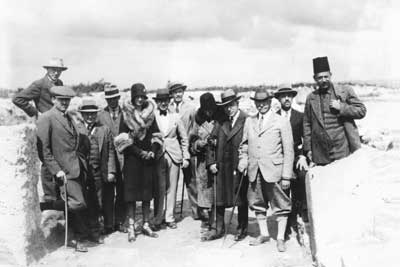
IMAGE:  From an Oriental Institute tour at Megiddo in 1929: David Rockefeller is third from the left; his father, John D. Rockefeller Jr., and his mother, Abby Aldrich Rockefeller, stand beside him. James Henry Breasted, founder of the Oriental Institute, is third from the right.
From an Oriental Institute tour at Megiddo in 1929: David Rockefeller is third from the left; his father, John D. Rockefeller Jr., and his mother, Abby Aldrich Rockefeller, are fourth and fifth from the right. James Henry Breasted, founder of the Oriental Institute, is third from the right. 
We sailed from New York on the S.S. Augustus in early January 1929. At the last moment Mary Todhunter Clark, known as Tod, who was a close friend of [my brother] Nelson’s from summers in Seal Harbor, came along as well...

Thursday, January 19, 2017

Oriental Institute Oral History Project Interview with John Larson, Museum Archivist

Published on Jan 19, 2017
Oriental Institute Oral History Project
Interview with John Larson, Museum Archivist
Saieh Hall for Economics at the University of Chicago

Wednesday, August 10, 2016

Obituary: Margaret (Peggy) Grant, 98

Margaret (Peggy) Grant, 98
From the Hyde Park Herald
AUG 10, 2016
Margaret (Peggy) Grant passed away Wednesday, Aug. 3, at the age of 98.  Her affiliation with the Chicago neighborhood of Hyde Park was a central part of her life. 
Grant had been a Hyde Park resident as a teenager attending the University of Chicago Laboratory High School, and moved back for the rest of her life in 1952 when her husband joined the University of Chicago Divinity School Faculty. Grant was born Margaret Huntington Horton in Middletown, Conn. on Dec. 3, 1917.  Her father, Douglas Horton, became Pastor of the United Church of Hyde Park. He subsequently became the General Secretary of the Congregational Church and later Dean of the Harvard Divinity School. 
Grant graduated from Wellesley College in the class of 1939, and then obtained an MA in Philosophy from Columbia University. She was predeceased by her husband, Robert McQueen Grant, Carl Darling Buck Distinguished Professor Emeritus in the Humanities at the University of Chicago, whom she married in 1940.  Grant was a 30-year volunteer at the Oriental Institute her time there includes serving as the volunteer director for a number of years. She was the third honoree of the James Breasted Award since its inception.
Grant had a long-term relationship with Chicago’s St. Paul and the Redeemer Episcopal Church where she had been director of the Sunday School. Some of her other interests included writing, acting and directing in University of Chicago Service League and Hyde Park Neighborhood plays, and attending the opera and symphony.  She was outgoing and enjoyed a wide circle of friends.  At Montgomery Place, the retirement home she moved to in her 90s, she was active in the poetry club and painting, and participated in the French Table and the German Table.
Randolph, New Hampshire was the other important location in her life. She summered in her family compound there for more than 70 years. She always welcomed anyone of any age who came to her door. In the Randolph community she was active in the Randolph Mountain Club, where she was Camps Supervisor, Board Member and Vice-President. She was a lifelong believer in exercise and swam laps every morning until her mid-90s. She was an active hiker and almost every hiker in Randolph has hiked with her. 
Grant is survived by four children, Douglas Grant, Peter Grant, Susan Slattery, and James Snyder-Grant, six grandchildren and two great-grandchildren. Additional survivors include her three siblings, Alan Horton, Alice Tibbetts, and Elizabeth Breunig, 14 nieces and nephews, and 24 grand-nieces and grand-nephews.
A Memorial Service will be held at Chicago’s Montgomery Place in the East Room at 1p.m. on Saturday, Aug. 27. A memorial event will also be held in Randolph in August 2017.
Wednesday, April 20, 2016

Video: Making a Difference: 50 Years of Volunteering at Oriental Institute

Making a Difference: 50 Years of Volunteering at Oriental Institute
While hundreds of people have volunteered at the Oriental Institute over the years, only two people have been there since the beginning. NBC 5's LeeAnn Trotter reports.


See the chronicle of news about the Oriental Institute

Saturday, August 15, 2015

Oriental Institute Museum Archives Records Added to Online Collections

Oriental Institute Museum Archives Records Added to Online Collections
"The cataloging of the Museum Archives has only just begun, but already users can search, sort, and display over 7,000 records and attached media (such as digitized photographs, negatives, and documents)."

Tuesday, May 5, 2015

News: Technology reveals ancient Egypt’s complex history

Oriental Institute team uses digital tools to capture nuances and share research
By William Harms Photo Courtesy of Epigraphic Survey, Oriental Institute
May 4, 2015
Sue Osgood

Documenting the remnants of an ancient civilization is a race against the ravages of weather and city expansion, and few places pose more challenges for preservation than Egypt’s rapidly changing environment. 
At the Chicago House, UChicago’s outpost in Luxor, Egypt, a team of Oriental Institute archaeologists and other specialists has traditionally used a 90-year-old process to create precise line drawings of the inscriptions and reliefs. Though the Epigraphic Survey team captured details too slight to show up clearly on photographs, it was difficult to account for complications such as repainted walls, ancient graffiti, or even ancient attempts to rewrite history. 
“Sometimes there are surprises, such as when we found traces of a figure of the 18th Dynasty female King Hatshepsut (1508–1458 B.C.), and her cartouche (her name in hieroglyphs) emerging from a wall erased by her coregent and successor Thutmosis III, who, long after her death, attempted to suppress all memory of her reign,” says W. Raymond Johnson, field director of the Epigraphic Survey...

See the chronicle of news about the Oriental Institute 

Thursday, April 2, 2015

The OI website is twenty-one years old

As of this month, the website of the Oriental Institute is twenty-one years old. In celebration, feel free to buy me or John Sanders a drink.

For a glimpse of the way the website looked in the past you can go to the Interet Archive's Waybck Machine, where it has been archived 537 times between May 8, 1997 and March 17, 2015.

An official history of the website is here.  Imagine running server with 20MB of RAM, and 250 MB of online disk storage. Those were the days.


Tuesday, March 31, 2015

Oriental Institute Statement on Cultural Destruction in Iraq

Oriental Institute Statement on Cultural Destruction in Iraq
March 4, 2015

The deliberate vandalism and destruction of heritage from Mosul’s Library, the Mosul Museum, and the archaeological site of Nineveh at Mosul constitute a moral and cultural outrage that adds to the growing spiral of despair from both Iraq and Syria concerning heritage, looting, and damage due to armed conflict. Without the past, we cannot understand our present, and without understanding our present, we cannot plan for our future. We hope that whatever remnants of this shattered heritage still surviving in Mosul may be salvaged and restored, but it is already clear that so much has been irreparably destroyed or looted.  Mosul’s heritage is an important part of Mesopotamian civilization and the heritage of the entire world.

The Oriental Institute of the University of Chicago is a leading institution for the study of the ancient Middle East that focuses on research, heritage and knowledge preservation, and public education. Iconic  artifacts from Iraq on display in the Museum of the Oriental Institute are accessible today for all to see. Many are counterparts to objects on display in the Iraq Museum, Baghdad, that come from the Oriental Institute’s excavations in Iraq. The Oriental Institute’s colossal human-headed winged bull, or Lamassu, was excavated from Khorsabad, ancient Dur Sharrukin, several miles north of Mosul. Carved in the late eighth century BC during the reign of King Sargon II (721–705 BC), it is one of the finest examples of Assyrian sculptor’s art in the world. At the site of Nineveh and in the Mosul Museum, similar sculptures have been smashed and mutilated in minutes by the Islamic State. The Oriental Institute condemns this callous eradication of the cultural treasures of Mesopotamia. We extend our deepest sympathies to the families of the people who are suffering in northern Iraq and Syria, and offer our support to the archaeological and heritage community of Iraq to help document, salvage, and restore the heritage of Mosul and other provinces of Iraq affected by looting and destruction.

We support the joint statement published by the Association of Art Museum Directors (AAMD), the Archaeological Institute of America (AIA), and the Society for American Archaeology (SAA), as well as statements from the American Schools of Oriental Research (ASOR) and The American Academic Research Institute in Iraq (TAARII).

Saturday, February 7, 2015

Those were the days.

From time to time I hear people remark on how old fashioned a website looks, often saying "it looks so 90s!" But to truly appreciate what the 90s looked like online, one has only to look at this, the oldest archived version of the OI website. I admit my complicity. It was a simpler time.